
 Newsletter Signup
Stay informed with the
NEW Casino City Times newsletter! Related Links
Recent Articles
|
Gaming Guru
  Top 10 things to consider before entering a live poker tournament23 November 2026
Tournament poker is complex and involves many strategic considerations, from what happens at the table to factors beyond your play, such as costs, duration, and more. If you are thinking about playing a live poker tournament soon, here are the top 10 things to consider before you sign up. 10. Online satellite options Before you go to the tournament venue and buy in at full price, consider whether online poker sites offer satellites for this event. Major poker tours such as WSOP, EPT, and WPT offer online qualifying opportunities that can save you a lot of money. Playing online satellites is a great way to cut costs for big poker tournaments, and packages often include hotel accommodations and other perks beyond the buy-in. Of course, if online qualification fails, you can always buy-in directly as well, but considering your online satellite opportunities first is always a smart choice. 9. Costs beyond the tournament entry The tournament buy-in may be the most immediate cost of playing, but it isn’t the only one. In fact, if you are playing a lower buy-in tournament, costs beyond the buy-in can often exceed the buy-in itself, especially if you're traveling for the tournament. Gas or plane tickets, hotel or other accommodations, and other necessities can eat deep into any potential profits you hope to make from the tournament itself. Professional poker players rarely travel for standalone tournaments and usually only make the trip if they can play multiple tournaments within a short time span. Fortunately, most poker venues now run full tournament series, giving players multiple chances to play within five to seven days, reducing overhead and optimizing costs. 8. Your mastery of the ICM If you want to succeed in tournament poker, you need to master ICM (Independent Chip Model). Most live poker players hardly know how to spell ICM, and it shows in their long-term results. Having a strong grasp of ICM and when it applies will help your tournament poker results immensely, making it one of the most important things to train leading up to any festival you hope to enter. Apps like ICMizer offer an easy way to learn and practice ICM with real scenarios, and they are the best way to prepare for the bubble stages and final tables of poker tournaments. Before you sign up for any poker tournaments, you should definitely perfect your ICM skills and spend some hours in the lab working on your ICM spots.  A strong push-fold strategy is key. Whether you like it or not, your tournament chip stack will dwindle to below 20 big blinds at some point during most events. A strong push-fold strategy in these spots is key to both survival and chip accumulation. Play too tight, and your stack will disappear one chip at a time. Play too loose, and you will give your stack away. The best tournament poker players know exactly which hands they can profitably shove from each position on each stack size, as well as when to move away from the push-fold strategy and go for a min-raise instead. We recommend watching poker coaching videos on this particular aspect of the game, or simply watching some of the best tournament players do it in real time at the tables. 6. Your basic preflop charts knowledge A major problem many novice tournament players face is not knowing which hands they should raise, call, or 3-bet from different positions. This part of tournament strategy has been solved for a long time and turned into easy-to-learn charts, and yet many players ignore the charts and play entirely by feel. If you want to be a strong tournament contender in the long run, you should fully master the preflop opening and 3-betting charts and always know which hands are worth putting chips into the pot. Otherwise, you will be playing a guessing game with every hand, and you will eventually end up making mistakes that add up to a big loss. 5. Your physical and mental stamina Live poker tournaments can be grueling. Playing poker for 10 hours or more day after day can be difficult even for players with strong stamina and endurance, so be careful when entering events with those requirements. If you have the physical and mental stamina to play poker at a high level for many hours at a time, you may be cut out for a live tournament player. If not, cash games might be your forte. Most players in live tournaments end up on autopilot by the end of the day, and they often make their worst decisions when it matters most. If you do choose to play a live poker tournament, make sure to get enough sleep the night before, eat right, and avoid putting alcohol and other toxins into your body in the hours leading up to the tournament. 4. When does the tournament end? Another thing many poker players forget to consider is the overall tournament duration. It’s not at all uncommon to see players fly out to a new city on a Friday evening to play in a poker tournament, advance to Day 2, and eventually make the final table, only to realize they have to play it on a Monday. If you are going into a live poker tournament, always plan as if you are going to go all the way and win the entire thing, because that is the ultimate goal. If a tournament ends on Monday next week, make sure to take that day off work and set up your flights and accommodations accordingly. If you bust early, you can use the extra day to unwind or play a side event and still have a successful poker trip. 3. Would you make more playing the cash games? When you go to a casino to play a poker tournament, you will often find plenty of cash game action on the sidelines. If you are hoping to maximize your profits from your poker trip, you should consider whether your time is best spent playing the actual event or grinding the cash games. If you have a strong skill set built around cash games and not much experience playing tournament poker, you may be better off spending your days at the cash game tables. What’s more, cash games offer significantly lower variance, so if tournament volatility bothers you, cash game tables are definitely the place for you. 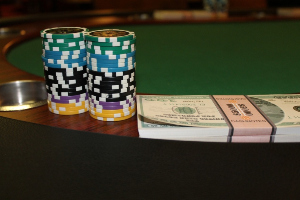 Make sure you can afford the buy-in. One of the most important things to consider before you enter a live poker tournament is whether you can afford the buy-in. Time and time again, you will see poker players enter events they have no business in, taking their shots and hoping to get lucky once. While this can occasionally work out for some players, more often than not, it results in a disaster, as you end up playing scared and not making your best decisions. Instead of playing one tournament you can’t afford, consider playing five or ten you can, building up your bankroll and skill set, and then playing the higher buy-in when you are actually ready. 1. The average skill level Your poker skills are certainly something to consider before playing any tournament, but so are the skills of the other players in the field. After all, if you are a good poker player playing at a table full of great ones, you will still be the loser. On the other hand, if you are playing against a table of average players, you are likely to be the biggest winner. Choosing the right tournament fields is just as important as improving your own skills, because the skill gap makes the biggest impact in the end. For example, tournaments like the EPT are notorious for being extremely difficult and full of strong regulars, so you should probably avoid them unless you are an elite player yourself. On the other hand, live tournaments at local venues and smaller buy-ins tend to attract thousands of fish, none of whom can actually be considered great poker players.
Top 10 things to consider before entering a live poker tournament
is republished from Online.CasinoCity.com.
Related Links
Recent Articles
Tadas Peckaitis |
Tadas Peckaitis |