
 Newsletter Signup
Stay informed with the
NEW Casino City Times newsletter! Related Links
|
Gaming News
Casino City Press Business Profile: Moniko2 September 2026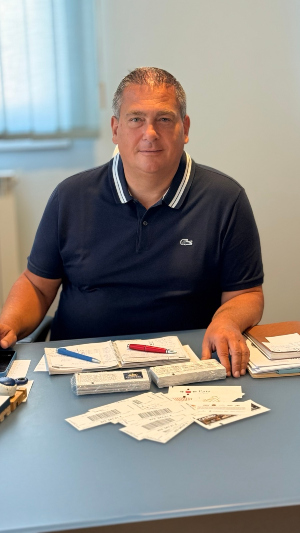 Vladimir Kjurchiev was 18 when he founded Moniko. Since 2012, the company has focused on perfecting TITO tickets, becoming the first certified producer in Europe and earning approvals from the three major ticket printer manufacturers: JCM, TransAct and Nanoptix. Now Kjurchiev has entered its biggest market yet. With the launch of Moniko US and a new production facility in Las Vegas, along with the acquisition of Slot-Tickets Worldwide, the company can now serve American casino operators with domestic lead times of five to seven days instead of shipping across the Atlantic. In our latest Casino City Press Business Profile, Kjurchiev shares his insights on Moniko's growth from a small European market into a worldwide supplier, the challenges of cracking the U.S. market, what separates a great TITO ticket from an average one, and why he believes TITO is here to stay despite all the talk of cashless gaming. Moniko was founded in Macedonia in 1993 and became Europe's first certified producer of TITO tickets. For casino operators who may be less familiar with the company, what have been the key factors behind Moniko's growth from a European manufacturer into a global supplier serving markets across Europe, Asia, Australia and the Americas? Founded in Macedonia in 1993, Moniko began as a local manufacturer of tickets and labels in a small European market. Despite operating from a country of fewer than two million people, Moniko has grown into a recognized global enterprise, with a presence across Europe, Asia and Australia, and a new production facility in Las Vegas, USA. Since 2012, we have focused on perfecting TITO tickets, becoming the first certified producer in Europe. Moniko has been built on leadership, a strong team, innovation, dedication, quality, and customer loyalty, giving us a real advantage in the casino industry. The key factors behind our success are the time and effort the Moniko team puts into production, design, and delivery; daily quality control; and continuous investment in new technology that allows the product to perform flawlessly. You've led Moniko through more than three decades of change in the gaming industry. How has your personal journey shaped your leadership style and the culture at the company? I founded Moniko at 18, and from the beginning, building the company required sleepless nights, resilience, continuous learning, strategic decision-making, and a willingness to take on significant challenges. Through all the changes, I have come to believe that what matters most is a determined sense of where you want to be in the future, and for me that meant making Moniko known worldwide. Under my leadership, and through the hard work of the entire Moniko team, we reached the markets of Europe, Asia, Australia, and America, and went on to open production in Las Vegas, allowing us to deliver the same high-quality product while operating closer to our customers and improving delivery times. Success means something different to everyone; for me, it meant turning the dream of a globally known Moniko into reality. It took a great deal of experience and growth to stand here today and see that dream realized. The big news is the launch of Moniko US and your new Las Vegas location. What drove the decision to establish a physical presence in the U.S. market? The decision to open a production facility came together quickly, once the right opportunity appeared to be closer to our partners overseas. We already had customers in the United States and an approved product, but only a handful. We could never grow beyond them, because everything had to ship from Macedonia. Producing locally changed that completely and made the ambition bigger. It gives our clients the confidence that they will receive the same quality, and receive it at their properties faster. It is part of a wider ambition to extend the legacy further, and above all, it gives our customers certainty. A TITO ticket might look like a simple product to someone outside the industry, but a lot happens behind the scenes with certifications, paper quality, security features, and printer compatibility. What separates a great TITO ticket from an average one, and how does Moniko approach quality control? The finished ticket looks simple, but the process behind it is not. TITO tickets are delicate products that require certified materials and tight control at every stage. Certification is the starting point. Moniko is approved by the three major ticket printer manufacturers, JCM, TransAct, and Nanoptix, which means our tickets have been tested and validated to run in the printers actually installed on casino floors. That matters more than any specification on paper, because the real test of a ticket is whether it feeds, prints, and cuts cleanly, run after run, without jamming a machine and taking it out of service. Material selection is the second element. We source certified thermal stock from qualified suppliers and hold them to consistent specifications, because variation in the substrate is where most quality problems begin. The third is inspection, and this is where we invest the most. Every run goes through automated print quality checks during production, followed by visual control and testing before packing, and a final visual check once the pack is complete. Three separate points of verification, on every order. It is deliberately repetitive. The cost of catching a defect in the plant is nothing compared with the cost of a casino discovering it on the floor. Behind all of that sits organization, quality management, and continuous investment in technology. But the principle is simple: an operator should never have to think about their tickets. What were some of the biggest challenges you faced in scaling Moniko into a global operation, and what lessons did you learn along the way that you're applying to the U.S. expansion? The hardest challenge we faced was entering the United States, the largest TITO market in the world. We had customers there, but only a small number, and we could never expand beyond them. Each time we tried, the same thing stopped us: everything had to ship from Macedonia. An operator cannot plan around a four- to six-week lead time, no matter how good the product is. 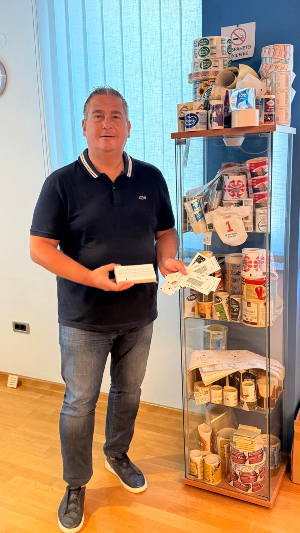 Moniko also has a presence across Europe, Asia and Australia. The second challenge was building the right team. We went through a highly selective process because a company is only as good as the people running it, and the standard we have held for over a decade in TITO had to travel with us. I believe we have found people who can scale Moniko in the US without compromising what got us here. The lesson I would carry forward is that being better is not enough on its own. The customer has to be able to feel the difference. In this market, they feel it in the lead time. Security is a constant concern for casino operators, and TITO tickets are essentially cash once they're printed. What security features does Moniko build into its tickets, and how do you work with operators to protect against counterfeiting and fraud? A ticket becomes cash the moment it is printed on the casino floor, and we treat it that way in production. On the ticket itself, we offer layered security features. The first is invisible UV ink, a specialized liquid that stays clear in normal light and glows in bright color under a blacklight or UV lamp, so a floor supervisor can verify a ticket in seconds without any equipment beyond a handheld lamp. Alongside it, we offer white-on-white printing and custom security patterns designed to the operator's requirements. These are available on request, because the right level of security depends on the property and the jurisdiction. We design the features together with the operator rather than imposing a standard specification. Inside the plant, every run is traceable by lot. That traceability is what allows us and the operator to account for stock precisely. It is worth being clear about how the security works overall. The decisive protection sits in the operator's system, which generates and validates the barcode that authorizes a payout. A counterfeit ticket that does not match a live record in the system is worthless. Our role is to secure the physical layer: to make the ticket itself difficult to reproduce, to ensure it prints and scans reliably every time, and to guarantee that no stock leaves our facility unaccounted for. The two layers work together, and we build our part around what the operator's system requires. Looking ahead, how do you see the TITO ticket category evolving? With all the talk of cashless gaming and digital wallets, where do physical tickets fit in the future of the casino floor, and how is Moniko preparing? My view is that TITO is here for at least the next fifteen years. Many operators have looked seriously at cashless, and it has not gained the traction people predicted. The reason is the player. Some want anonymity. Some are there for an hour of entertainment and have no interest in registering for an account or downloading an application before they can play. Operators are not going to force that friction onto customers who are spending money. I expect the category to flatten and consolidate rather than decline. Fewer suppliers, serving operators who want quality, competitive pricing, reliability, and shorter, more frequent deliveries. At the same time, there is genuine growth still ahead in markets that are only now moving to TITO, and we are already active in several of them. As for how we are preparing, we are developing new products for the gaming industry, built around technologies designed to improve the experience for the player. It is too early to say more, but we will have something to show the market before long.
Casino City Press Business Profile: Moniko
is republished from CasinoVendors.com.
|